Designing Cities That Care: What Happens When Women and Girls Shape the Urban Agenda
When cities are designed with women and girls, they become safer, healthier and more humane for everyone. Care, not cars, becomes the organising principle.
Business as usual approaches have prioritised economic efficiency, long commutes and large infrastructure projects designed around the 9 to 5 workday. In doing so, they have often sidelined everyday life, care, health and inclusion.
Designing better cities for women and girls offers a way out of this impasse. Not because women need special treatment, but because their daily experiences reveal the blind spots of conventional planning. A city that works for women and girls is a city that works for people across all stages of life.
Why women and girls experience cities differently
Urban planning has never been neutral. In Australia for most of the last 300 years, decisions about how cities look, feel and function have largely been made by white, middle class men. The result is an urban environment shaped around a narrow idea of productivity and movement.
Two fundamental differences shape how women and girls experience cities.
The first is fear. Fear of sexual harassment or violence influences where women go, when they go, and how they move. This fear is not abstract. The vast majority of women report using strategies to avoid harassment, starting from childhood. Girls’ participation in public space drops from around eight years old, long before adulthood sets in.
The second is care. Women continue to carry the majority of unpaid and underpaid care work. This includes caring for children, older parents, people with disability, and managing domestic tasks that keep households running. Care work generates complex travel patterns, multiple short trips, time pressure and reliance on walking and public transport. Cities designed around linear A to B commuting fail to support this reality.
Together, fear and care shape women’s autonomy. When a city makes you think twice about going out after dark, catching a train alone, or letting your child walk independently, it limits access to work, education, social life and opportunity. Over time, these spatial barriers contribute to wider inequality, including pay gaps and underemployment.
Designing with, not for
One of the most important lessons from international examples is that you cannot design cities for women and girls without designing with them.
Cities such as Vienna, Barcelona and Umea have shown the value of gender mainstreaming. This means embedding a gender lens into everyday decision making, budgeting, policy and design, rather than treating gender equity as a special project.
Gender mainstreaming starts with asking better questions. "Who uses this space at different times of day?" "Who avoids it, and why?" "Who is missing from the conversation?" Crucially, it also means paying women and girls for their time and expertise, recognising lived experience as a form of knowledge.
At Nangle, we see this approach align closely with good place practice. The most successful public spaces emerge from listening carefully to how people actually live, not how models assume they do. This challenge is becoming increasingly important across Sydney’s growing strategic centres, including Parramatta, Liverpool, Penrith and Campbelltown, where population growth is reshaping how people move through and experience public space.
Public spaces that signal belonging
Feeling unsafe is a symptom, not the root cause, of gender inequity in the city. The deeper issue is a lack of social and physical signals that tell women and girls they belong.
Feeling unsafe is a symptom, not the root cause, of gender inequity in the city. The deeper issue is a lack of social and physical signals that tell women and girls they belong.
Public spaces designed for belonging are social by default. They are active, well used and visually engaging. They offer places to sit, gather, observe and participate without needing to spend money. They provide multiple reasons to be there, not just pass through.
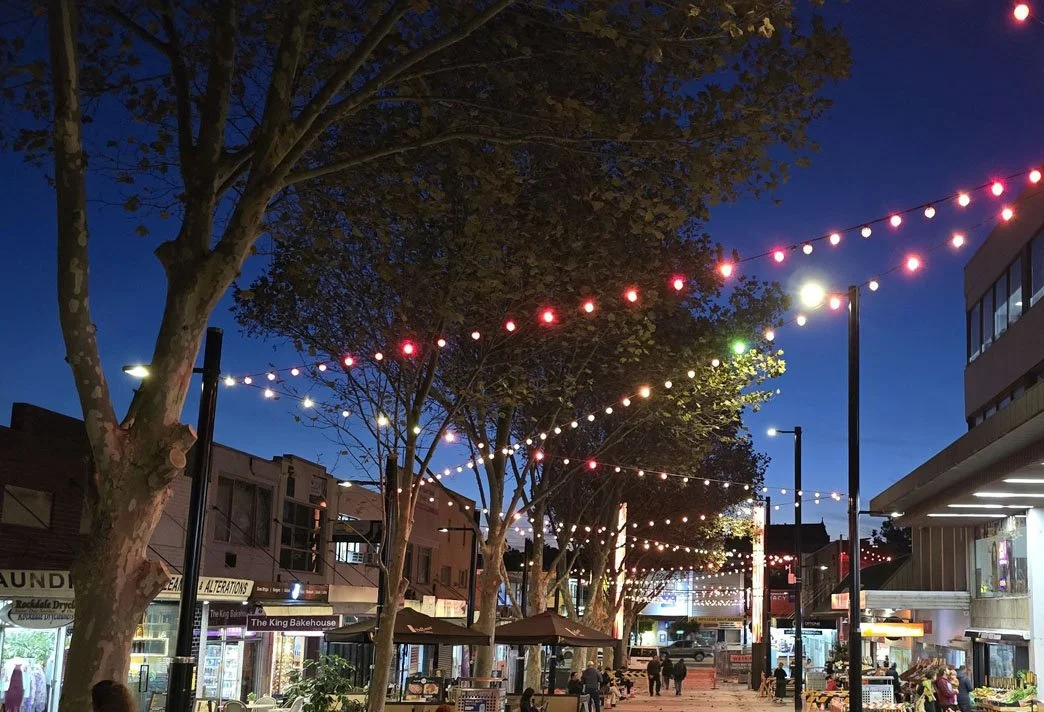
Design details matter. Lighting that supports faces rather than glare. Clear sightlines without hidden corners. Moveable seating that allows people to choose proximity and comfort. Diverse programming that reflects different ages and cultures.
These are not security measures. They are signals of care.
Landscape architecture plays a central role here. Through planting, spatial structure and human scale design, public spaces can feel welcoming rather than intimidating. When women and girls are comfortable occupying space, safety improves for everyone.
Mobility beyond the A to B trip
Traditional transport planning is dominated by the commute. But women’s travel patterns tell a different story. Short trips, trip chaining, off peak travel and walking dominate daily movement.
Designing for women means thinking beyond car centred cities and linear journeys. It means imagining a city where you cannot drive, and where responsibilities shape your day.
Generous footpaths, safe crossings, seating at regular intervals, shade, and protected cycling routes are all essential. So is public transport that supports shift work, not just office hours.
Importantly, women need to be involved in the design and delivery of infrastructure. Increasing women’s participation in engineering, construction and decision making leads to better outcomes, because different questions get asked earlier.
A city that cares is a city that works
Designing better cities for women and girls is not a niche exercise. It is a way of addressing the structural weaknesses in how cities are planned.
A city that supports care, values safety as autonomy, and prioritises everyday life over peak hour efficiency is more resilient, more inclusive and more sustainable.
The measure of success is simple. When women and girls can move freely, feel welcome, and participate fully in public life, everyone benefits.
At Nangle, we are glad to have been involved in projects which are being led by the Safer Cities: Her Way initiative. We have often found that when walking and cycling environments are designed with this lens in mind, they also perform better for older people, children and people with disability.