Plugging In Without Plugging Up Our Streets
As EVs surge, our streets are quietly filling with chargers. Thoughtful urban and landscape design can ensure they enhance place rather than clutter it.
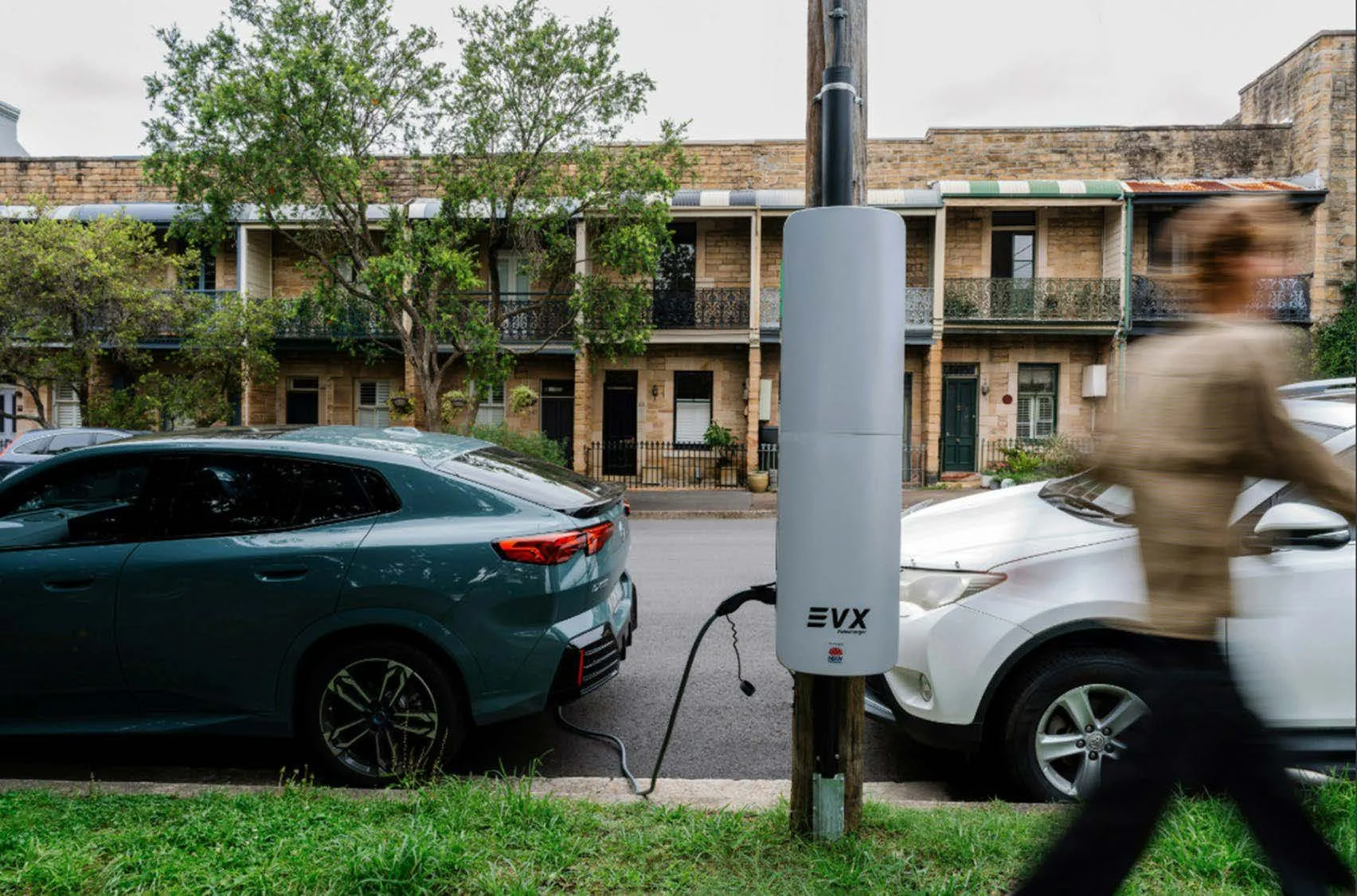
Electric vehicles are no longer a future ambition; they are a present day reality. With uptake accelerating across New South Wales, attention has understandably focused on charging availability, network capacity and technology standards. Yet a quieter, equally important question sits in plain sight: "What does all this new infrastructure do to our streets and public spaces?"
Transport for NSW’s Successful Places in Future Transport 2061 makes a clear commitment: Transport infrastructure must help create and support successful places. That responsibility extends beyond function. Every object placed in the public domain contributes to how a street looks, feels and works. EV charging points, while modest in size individually, will have a cumulative impact as they roll out street by street, suburb by suburb.
The rollout is likely to be most visible in major centres such as Parramatta, Liverpool, Chatswood, Penrith and Sydney Olympic Park, where higher densities and reduced access to private charging are increasing demand for public infrastructure.
This is where urban design and landscape architecture play a critical role. At Nangle, we see EV charging as more than a technical insert; it is a public-domain intervention that needs to be carefully considered across multiple scales - the residence, the street and town centre and the suburb.
Choosing the right street: sensitivity before convenience
Not every street is equal, and not every convenient location is appropriate. High activity streets, with shops, cafes and strong pedestrian flows, often seem like obvious candidates for EV charging. They offer visibility and convenience, but they are also the most sensitive to change.
Selecting the right street requires an understanding of context. Electricity supply and integration opportunities should be assessed early, particularly the potential to connect with existing infrastructure. Equally important is respect for the street's character, recognising that heritage streets, fine-grain retail strips and leafy residential avenues each demand different design responses.
Movement networks must be protected. Charging infrastructure should not compromise cycle paths, bus routes or accessible pedestrian movement. Parking regulations and dwell times need careful alignment with charging behaviour, ensuring chargers are practical without disrupting existing street function.
Wayfinding and safety also play a role. Chargers must be easy to locate without relying on visual dominance. Lighting, visibility and subtle signage can do much of the work, provided they are integrated thoughtfully into the wider streetscape. Positioning should also reflect CPTED principles, ensuring charging infrastructure does not obstruct sightlines, reduce passive surveillance or create concealed spaces within the public domain.
Placement within the street: the fine grain matters
Once a street is deemed suitable, the most critical decisions are often the smallest ones, such as the exact placement, orientation and relationship to other elements.
Accessible paths of travel are non-negotiable. Footpaths must continue to meet DDA requirements, maintaining clear widths, logical kerb ramp connections and appropriately sized accessible parking spaces. Chargers should follow established zones for street furniture, aligning with lighting poles, trees or signage rather than creating new clutter within the footpath.
DDA accessibility must be embedded in both the location and operation of charging infrastructure. Poor operational design is a key culprit in accessibility failures, with cords crossing walking paths, awkward angles between vehicles and chargers, or poorly considered pavement treatments quickly increasing risk and reducing usability.
Integration again proves valuable. Co-locating chargers with existing infrastructure reduces clutter and reinforces order within the street. Where this is not possible, placement should respect other uses such as benches, bike hoops, outdoor dining and pedestrian desire lines.
Vegetation, often an afterthought, should be treated as an asset rather than an obstacle. Mature street trees contribute shade, comfort and character; charger placement should avoid root zones and canopy conflicts wherever possible. With careful design, charging infrastructure and greenery can coexist without compromise.
Aggregation: designing for the long view
Perhaps the greatest risk with EV charging is not any single installation, but the cumulative effect of many. What feels acceptable as a one off can become overwhelming when repeated dozens of times along a corridor or across a centre.
A strategic, place led framework helps manage this aggregation. Consistent design language, coordinated placement strategies and clear hierarchies between different street types ensure chargers feel like a planned system rather than a series of opportunistic add ons.
From our experience working with councils and transport teams, early multidisciplinary collaboration between urban design, landscape, traffic and electrical is essential to avoid many downstream conflicts and ensures the street continues to function as a cohesive whole. Design outcomes are strongest when electrical requirements are integrated into a broader urban and landscape framework, rather than determining the layout in isolation.
This is where landscape architecture brings particular value. By balancing technical requirements with spatial clarity, human comfort and long term stewardship of the public domain. At Nangle, we often work alongside engineers and transport planners to translate policy intent into on ground outcomes that genuinely support successful places.
Charging for people, not just vehicles
Ultimately, EV charging infrastructure succeeds when it serves people first. Drivers, pedestrians, cyclists, shop owners and residents all experience streets differently. Good design recognises these overlapping needs and resolves them holistically.
As NSW transitions to an electric future, our streets will inevitably change. The challenge (and opportunity) is to ensure that the change strengthens local character, improves usability and aligns with broader sustainability goals.
EV charging points do not have to be visual clutter or spatial compromises. With careful siting, high quality design and a place based approach, they can become just another well considered layer in our evolving streetscapes which quietly support a cleaner transport system while preserving what makes each place distinct.
That balance between infrastructure and place is where thoughtful design makes all the difference.