Holding the Line: How Vegetated Batters Can Shape Better Places, Not Just Better Slopes
Batters are everywhere. When designed with care, they can stabilise land, restore ecology and become defining features of infrastructure, parks and public space.
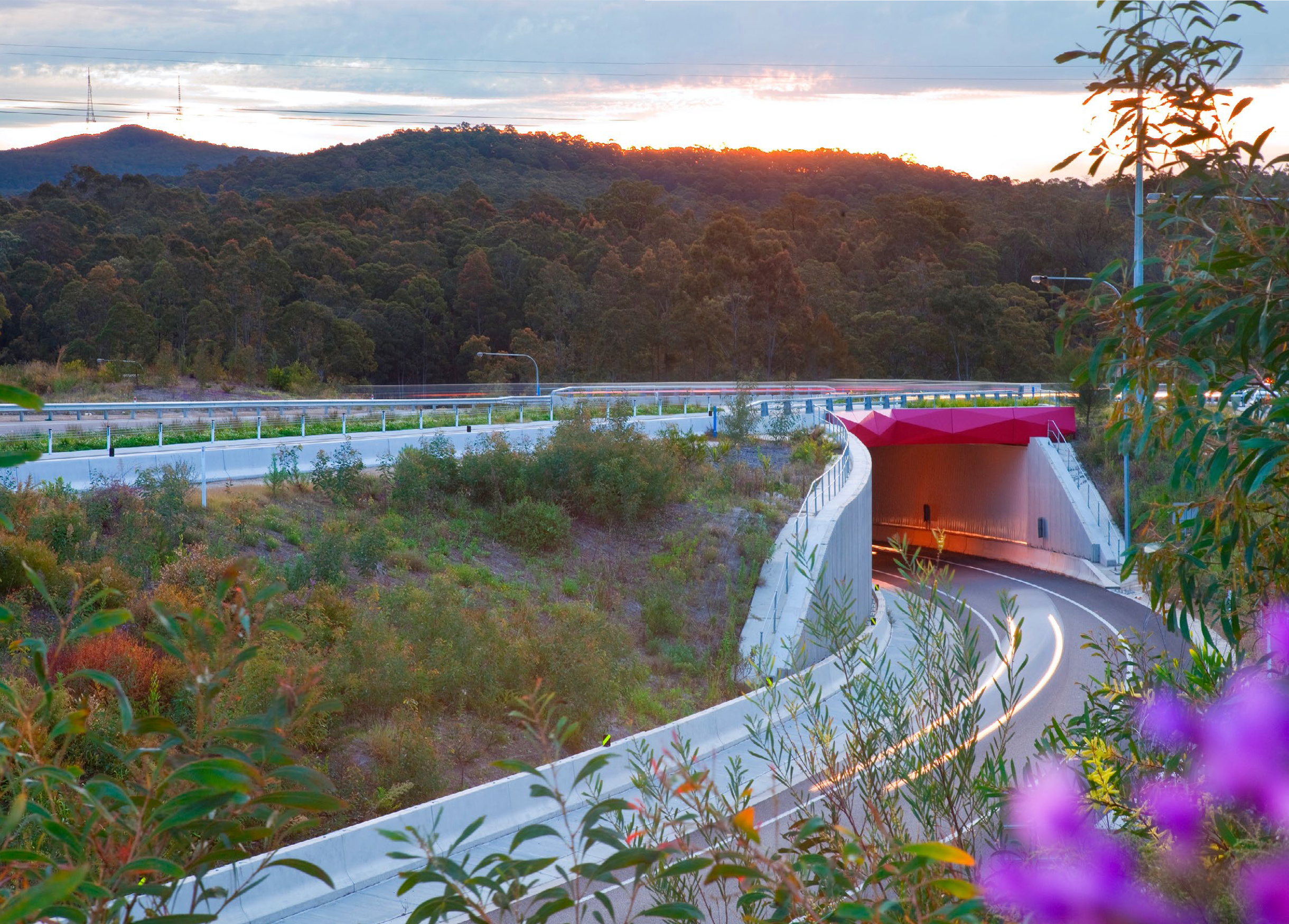
Every time the land is reshaped, a batter is likely to be formed. Sometimes it emerges quietly from a road cutting or embankment. In other cases, it is the unavoidable outcome of building platforms, flood mitigation works, sports fields, creek rehabilitation or major earthworks within parks and civic spaces. Batters sit at the interface between engineered form and natural landscape, making them both highly visible and highly consequential.
Too often, they are treated as leftover geometry. Slopes to be grassed, sprayed or simply “held together” until the project moves on. Yet when designed well, vegetated batters can do far more than resist erosion. They can stabilise land, manage water, support habitat, soften built form and introduce visual structure into places that might otherwise feel harsh or unresolved.
That shift from incidental slope to intentional landscape is where vegetated batter design comes into its own.
At Nangle Landscape Architecture, we approach batters as a design and performance challenge rolled into one, whether they sit beside a road, along a creek line, behind a sports field or beneath a building podium.
Surface stabilisation, not structural substitution
☆ Vegetation stabilises the surface, not the structure.
Geotechnical stability must always be addressed first through earthworks design, retaining systems or ground improvement. Vegetation then works with that engineered landform, protecting soil particles, reducing runoff velocity and anchoring the surface layer through root systems.
This distinction matters well beyond transport projects. In parks, waterways and developments, planting is still too often expected to compensate for slopes that are overly steep, poorly drained or fundamentally unstable. When roles are clearly defined, vegetation performs reliably and predictably.
Surface stabilisation focuses on what happens at and just below the skin of the slope: raindrop impact, sheet flow, rill formation and gradual soil loss. When properly specified, vegetation excels at this task across a wide range of settings.
Start with slope, wherever it occurs
☆ Slope geometry remains the non-negotiable factor, regardless of location.
Gentle batters allow soils to be applied and vegetation to establish with relative ease. As gradients increase, soil retention becomes harder, access more constrained and stabilisation techniques more specialised. Long slopes compound these challenges by increasing runoff energy, often requiring benches, terraces or flow interruption measures.
These physical limits apply equally to a creek embankment, a landscaped podium edge or the perimeter of a sports field. Good outcomes come from acknowledging them early, rather than attempting to retrofit solutions later.
In our experience, the most successful projects test batter profiles against stabilisation options during design development. This avoids the false economy of steepened slopes that appear efficient on paper but demand ongoing maintenance or remediation.
Soil is the real foundation
☆ Vegetation can only perform as well as the soil that supports it.
Across all project types, failed revegetation is more often traced back to poor soil quality than poor plant selection. Topsoil remains the most valuable revegetation resource available. When stripped, stored and reused correctly, it brings organic matter, nutrients, microbial life and sometimes a viable seed bank.
When mismanaged, compacted or stockpiled too long, it can become biologically inert.
In parks, waterways and urban developments, subsoils frequently require amelioration before planting can succeed. Structural correction, pH adjustment, organic matter and biological inputs all have roles to play, but only when informed by proper soil testing.
One of the most consistent lessons across infrastructure and open space projects is that early soil investigation pays for itself many times over.
Temporary cover versus long term landscape
☆ Vegetated batters are rarely established in a single step.
Successful projects deliberately combine temporary stabilisation with long term landscape intent. Rapid establishing cover species protect soil in the short term, reducing erosion and suppressing weeds while longer lived vegetation takes hold.
These temporary species are not the final landscape. Problems arise when they are treated as such.
Permanent vegetation should be selected for durability, low maintenance and contextual fit. In naturalised settings, locally appropriate native species allow batters to move through a compressed version of ecological succession. In urban parks or civic spaces, planting may be more structured, but still designed for longevity.
At Nangle, we often specify stabilisation strategies that explicitly plan this transition so early measures support, rather than compete with, the final landscape.
Matching technique to timeframe
☆ Not all batters demand the same solution.
Short term stabilisation may rely on mulch, tackifiers or erosion control blankets where immediate protection is critical. Medium term works often balance speed and cost through hydraulic application techniques. Long term batters, whether in parks, along waterways or within transport corridors, demand approaches where vegetation becomes the primary stabilising agent for decades to come.
The common pitfall is misalignment. Over investing in temporary measures that outlast their purpose or under investing in permanent solutions that fail just as maintenance responsibility shifts.
A landscape led approach looks at the full lifecycle from establishment to self sufficiency.
Visual amenity and spatial structure
☆ Batters are often highly visible, space defining elements.
In parks and public spaces, batters can become defining landform elements rather than something to disguise. Carefully planted slopes introduce depth, rhythm and structure, creating visual interest while managing level change.
Technical performance and visual quality are deeply linked. Healthy, dense vegetation resists erosion and reads as intentional. Poorly established slopes are not only unattractive, they are unstable, weed prone and expensive to maintain.
Seeing batters as part of the broader landscape composition, rather than residual space, consistently leads to better outcomes.
Access, safety and maintainability
☆ Vegetated batters heighten the need to think about access and safety.
Steep slopes are inherently difficult to reach, whether beside a road, within a park or behind a building. Stabilisation techniques must consider how they will be installed, inspected and maintained, often with limited access.
Designing batters to minimise future intervention is one of the most effective ways to manage risk and cost. This typically means favouring robust vegetation, appropriate gradients and realistic maintenance regimes over fragile or highly engineered finishes.
Reframing batters as landscape assets
Batters will always exist wherever land is reshaped. The real question is whether they are treated as unavoidable scars or as opportunities to do better. When vegetation is applied intelligently, grounded in soil science, matched to slope and aligned with long term landscape intent, batters can become stable, resilient and integral parts of place.
That integration of engineering logic and landscape thinking is where the greatest value lies. It is also where landscape architecture, applied early and strategically, consistently improves outcomes across infrastructure, waterways and public space.
In the end, holding the line is not just about erosion control. It is about shaping land that works, lasts and belongs.
If you are looking for a good starting place when selecting batter stabilisation, check out the RMS ‘Guideline for Batter Surface Stabilisation using vegetation’ available here.